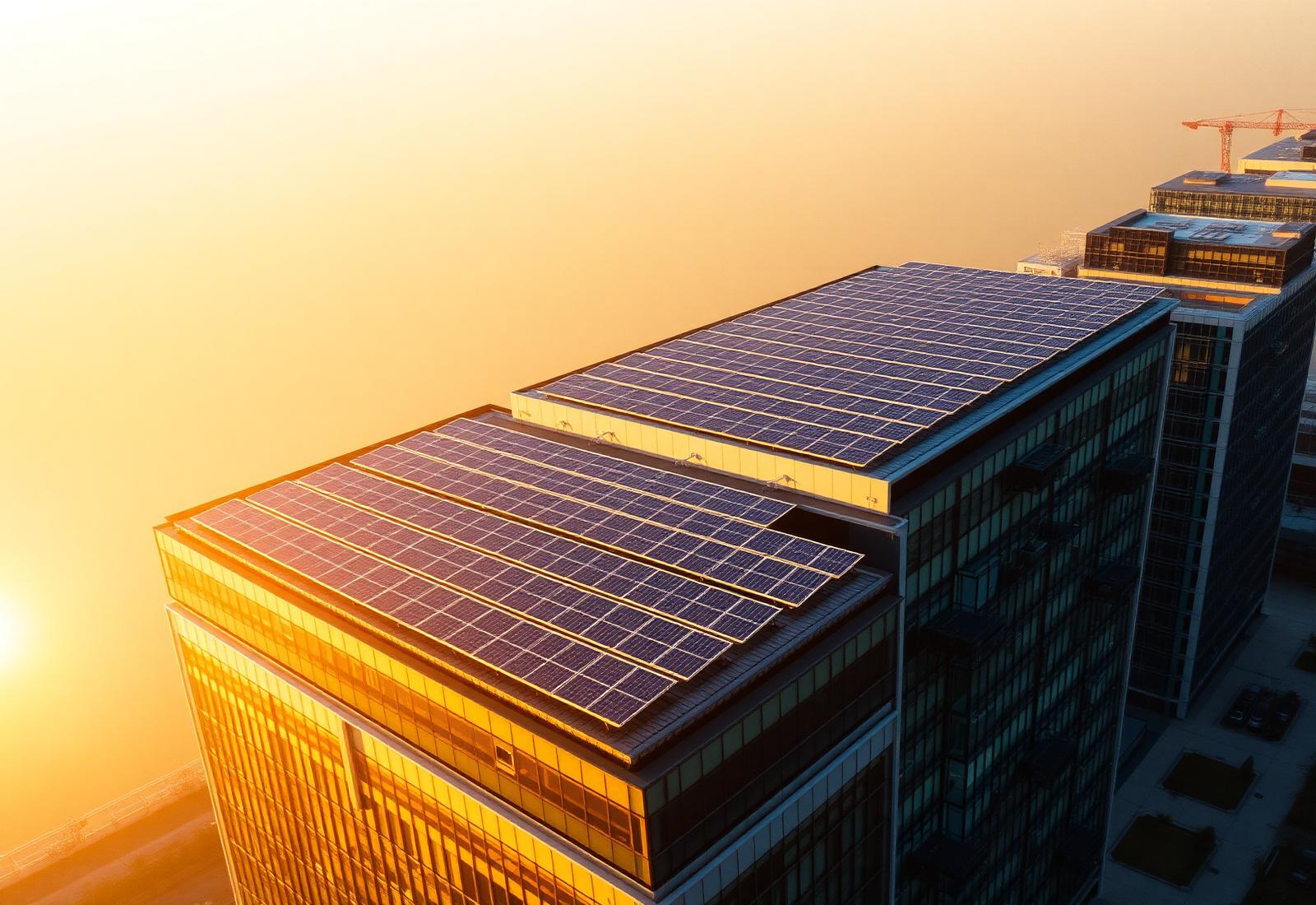
Our Businesses · Renewable Energy
Solar is being designed into every TANNY campus — before the first occupier moves in.
Captive solar generation — on our campuses and at dedicated facilities — planned for consumption entirely within TANNY's own IT parks, never for sale outside.
The Model
Solar only. Our parks only. On purpose.
TANNY's renewable vertical is being built to do one thing: generate solar power for consumption within TANNY's own IT parks. Generation is planned in two forms — on-campus solar built into each development, supplemented by dedicated captive solar capacity off site — with every unit consumed by our own campuses. We will not trade power, chase feed-in tariffs, or run an energy business on the side. The discipline is the point: energy here is treated as campus infrastructure, like lifts or fire systems, designed in from the first drawing and operated by the same group for the life of the asset.
Captive self-use is also the cleanest position Indian electricity regulation offers — without the surcharges and structuring that complicate third-party green power procurement. What we are designing toward is simple: buildings whose energy is partly sunlight, metered, at a cost that doesn't ride the tariff cycle.
Why We're Building It This Way
The enterprises we build for are already being asked. We are designing the answer in advance.
ESG reporting has stopped being voluntary for the occupiers our campuses target — and electricity is where a building either helps or hurts. Purchased grid power sits in Scope 2 of an occupier's greenhouse-gas inventory under the GHG Protocol; solar consumed in a building reduces it. That is the compliance landscape TANNY's campuses are being designed for.
Card 01
BRSR & BRSR Core (India)
SEBI's Business Responsibility and Sustainability Report mandates Scope 1 and Scope 2 emissions disclosure for India's top 1,000 listed companies — and BRSR Core requires reasonable assurance, at financial-audit grade, on energy and emissions KPIs: the top 500 companies from FY 2025-26, the top 1,000 from FY 2026-27. Assurance runs on evidence — meter readings, bills, emission factors. TANNY's campuses are being designed with campus-level generation and metering so that, once operational, occupiers have that evidence in their own building.
Card 02
Global parent frameworks
Most capability centres report upward: EU parents consolidate their Indian operations under CSRD; large US companies face California's climate disclosure laws. A building designed for captive solar is designed to report a smaller Scope 2 to headquarters. For an enterprise comparing buildings for a 2028 occupancy, design intent — specified and verifiable before fit-out — is exactly what site-selection teams evaluate.
Card 03
Green building certification
Every TANNY campus is designed in alignment with IGBC and LEED green building standards, with certification targeted as each asset completes. On-site renewable provision is part of that design — so occupiers with green-workplace mandates inherit both the standard and the generation behind it from day one of the lease.
Card 04
Total cost of occupancy
Captive solar is designed to displace grid units across our campuses — under the self-use framework of the Electricity Act 2003, without the surcharges that burden third-party green procurement. The design goal for occupiers: operating costs that are lower and, more importantly, predictable across a lease term.
Green power elsewhere is a certificate to buy. Here, it is being engineered into the building itself.
How It's Being Built
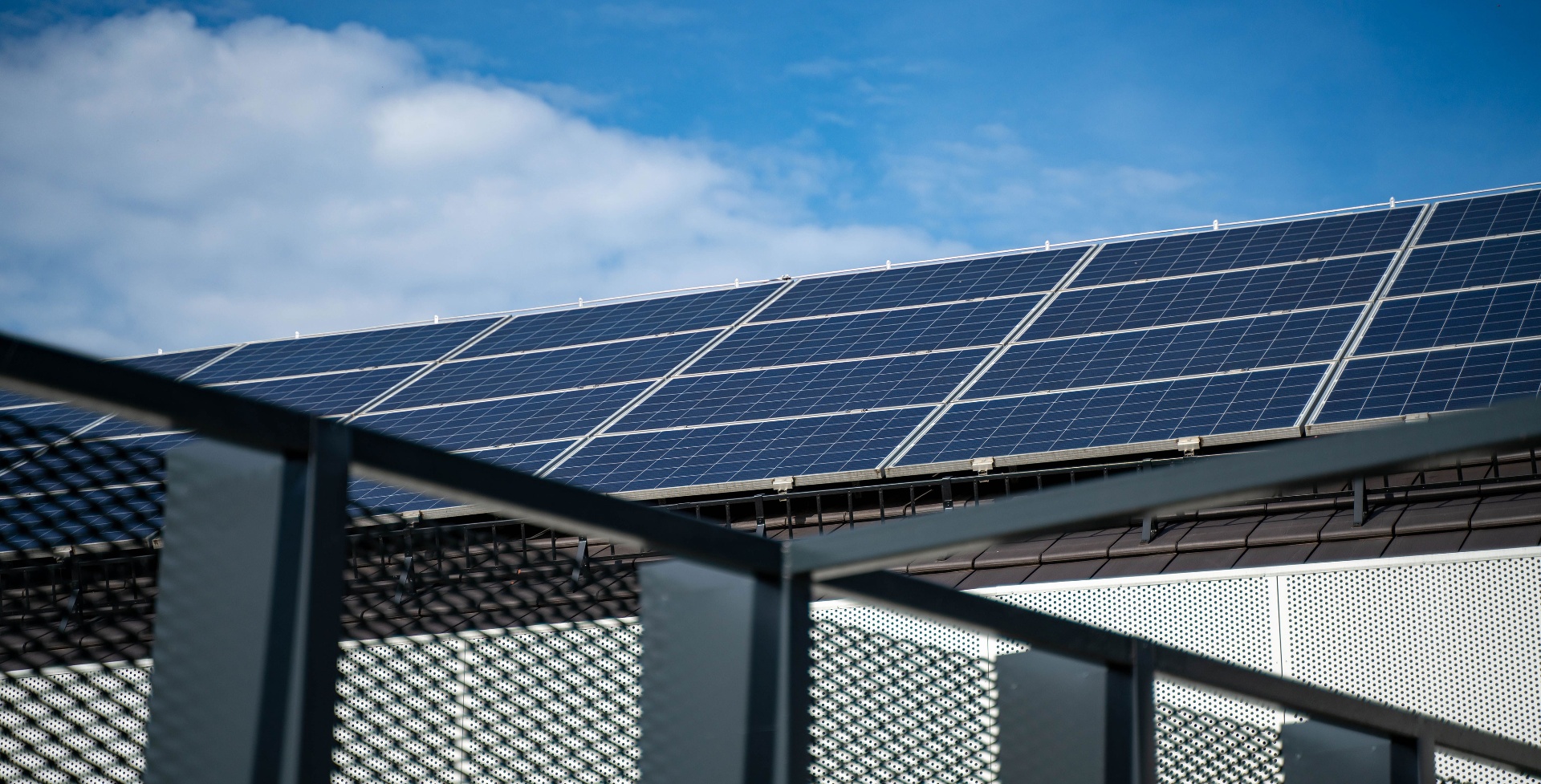
Solar capacity is planned into each campus from the master plan — panel-ready structures, inverter and metering provisions, and building systems specified to consume generation first and grid second — with dedicated off-site captive capacity planned to supplement what rooftops alone cannot carry. Capacity for each campus is finalised at design stage. Generation figures, renewable share, and emissions data will be published here as each asset commissions — measured, not projected.
What It Means For Investors
Energy designed to improve the asset — not a side business to fund.
Investors sometimes read "renewable vertical" as diversification risk — capital wandering from the core business. TANNY's model is the opposite: solar capex serves the real estate, and this phase — with CAG under construction and INFINI and SENCO commencing — is precisely when it is designed in.
01
Built-in, not bolted-on.
Provisioning solar at construction stage costs a fraction of retrofitting it — and the development phase is the only time that option exists. That efficiency is being captured in the asset's base cost now.
02
A leasing advantage by design.
The occupiers these campuses target are the companies under BRSR Core assurance and parent-company climate reporting. A building designed to lower their Scope 2 and their power cost is designed to lease faster and retain longer — and occupancy and retention are what an operating asset's value stands on.
03
Operating cost as a moat, once live.
Self-generated power at near-zero marginal cost, under a framework exempt from the surcharges loading grid alternatives, is designed to hold cost per square foot down for decades — protection against the tariff escalation that erodes returns on conventionally powered assets.
04
An asset built to the screen institutional capital uses.
ESG-aligned, certification-targeted, with audit-grade energy data planned from day one — the profile the next generation of real estate capital screens for.
As with everything TANNY offers investors: no performance figures here, and none exist yet — the programme is in development. The mechanism is on this page; project specifics live in offer documents, discussed directly.
Where This Stands Today
Plainly: TANNY's solar programme is in development, alongside the campuses it will power. Nothing on this page is an operational claim — no megawatts, no percentages, no certificates. Capacity is being finalised campus by campus; the first measured figures will be published when the first asset commissions, and not before. Solar will offset a designed share of consumption, not deliver grid independence. And regulation moves — policy proposals under national discussion could narrow the cost gap between captive and grid power over time, though the reliability, ESG, and predictability logic is not tariff-dependent. We would rather publish this page early and honest than late and inflated. When the numbers exist, they will be here.
Renewable Energy
Designed in now. Measured when it's real.
For the design detail behind any campus, or investor discussions, speak directly with our team.
Regulatory references: SEBI BRSR & BRSR Core circulars (2021–2025) · GHG Protocol Scope 2 Guidance · Electricity Act, 2003 · EU CSRD · California climate disclosure laws — as of July 2026. Occupiers should confirm applicability with their own advisors.